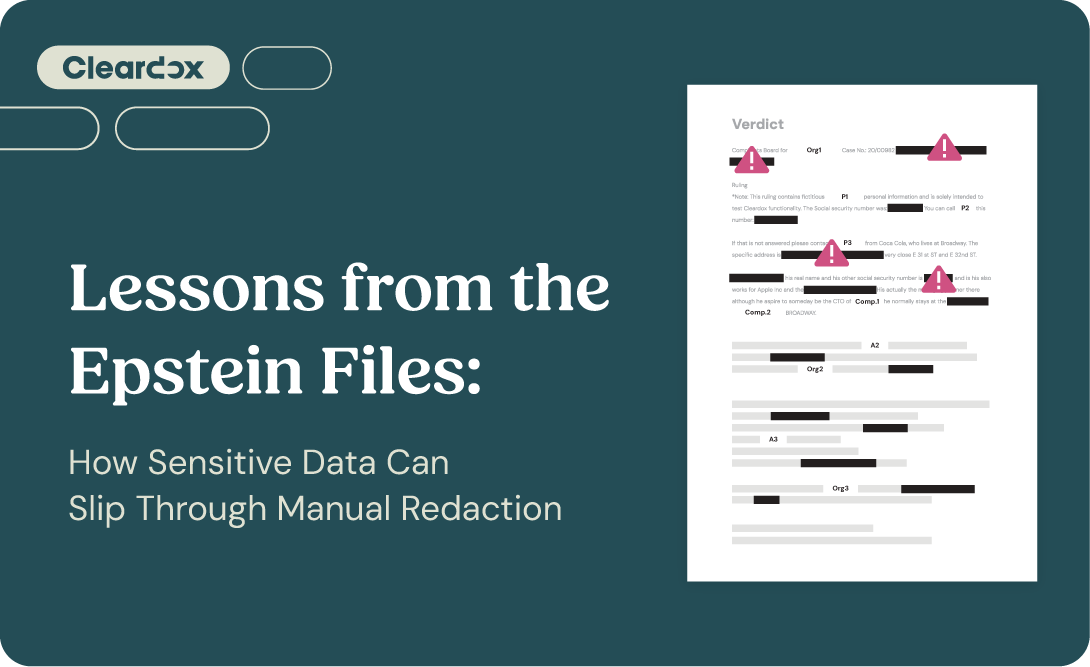
The Challenge of Redaction in Insurance Claims


The challenge of redaction in insurance claims
June 11, 2024
"Hi, I'm John Doe. I'm reaching out today because my husband, who is courageously battling the rare disease XYZ, recently faced a harrowing accident. He fell through the roof, fracturing his leg. What makes this situation even more challenging is that our long-time neighbor, who has struggled with alcoholism for years, was an eyewitness to it all."
This incident has the potential to spark an injury or claims case with any regular insurance company. However, there's a common obstacle that often plagues insurance companies in such scenarios – the avalanche of sensitive and irrelevant information they receive.

The Challenge: Drowning in Data
In the world of insurance claims, information is invaluable. However, insurance companies often find themselves buried under a mountain of data that isn't always directly relevant to the case at hand. Personal histories, medical records, and even unrelated incidents can flood the claims process, complicating matters and increasing the risk of data breaches.Moreover, insurance companies are legally obliged to not just remove but also anonymize this excess information. Failure to do so can result in privacy breaches and compliance issues. The traditional methods of manual redaction are becoming increasingly impractical, time-consuming, and error-prone. As staff comb through pages of documents, fatigue can set in, leading to oversights and missed redactions of crucial details.
The Cleardox Solution: Addressing the Challenge
Enter Cleardox, a redaction software tool designed to help insurance companies tackle this challenge efficiently.
The Cleardox Approach:
- Automated Redaction: Cleardox's software automates the process of identifying personal and sensitive information within documents, simplifying the workload.
- Precision and Reliability: By automating the process, Cleardox minimizes the risk of human errors, ensuring all relevant personal and sensitive data is redacted.
- Seamless Workflow: Our software presents identified information to the user for review and confirmation, simplifying the process while safeguarding data privacy.
- Irreversible Anonymization: Cleardox ensures that redactions are permanent, enhancing security for sensitive information.
Try Cleardox here
Conclusion
The challenge of managing sensitive information in insurance claims is undeniable. Cleardox offers a practical solution, automating redaction to streamline the process and protect data privacy. Embrace Cleardox's approach to data redaction, a tool that simplifies the claims process and helps you meet legal obligations. Stay tuned for how Cleardox can make a difference in your insurance operations.
Why is redaction important in insurance claims?

Insurance claims often contain more personal and sensitive information than is necessary to process a case. Proper redaction helps protect individuals' privacy, reduces the risk of data breaches, and supports compliance with GDPR and other data protection regulations.
Why is manual redaction difficult for insurance companies?
Insurance claims can include hundreds of pages of medical records, witness statements, and supporting documents. Reviewing and redacting these manually is time-consuming, repetitive, and increases the risk of human error.
What types of information should be redacted in insurance claims?
Insurance documents may contain names, addresses, medical information, financial details, and other personal data that is not relevant to the claim. This information should be anonymized before documents are shared with third parties.
How can automated redaction improve the insurance claims process?
Automated redaction helps identify sensitive information much faster than manual review, reducing repetitive work and lowering the risk of missed personal data. Solutions like Cleardox also allow users to review and approve suggested redactions before documents are shared.
Why is irreversible anonymization important for insurance documents?
Sensitive information should not be recoverable once it has been removed. Irreversible anonymization ensures that personal data cannot be reconstructed, helping organizations protect privacy and comply with legal requirements when sharing documents.